By
In the writing world, authors tend to categorize themselves as plotters or pantsers. For those of you not in the know, a plotter is someone who — get ready for it— plots! They’re organized, create detailed outlines, scribble away at character bios, have notebooks stuffed to the gills with notes and research tidbits, and most likely have a mood board that is precisely labeled. Pantsers are more “write by the seat of their pants.” They go where the creative wind takes them. Outlines, beh, not on their watch.
Plotter, Pantser … or Plotser?
For the longest time, I considered myself a plotter. I live by routine. I adore lists and the satisfaction of checking off items. Everything has its exact place and appropriate time, and woe to anyone or anything that gets me off schedule. I crave dependability and reliability, which blend seamlessly from life to my writing. At least in the beginning. As many writers will tell you, when you start the first book (or several), you’re still learning the craft and your voice. What works and what doesn’t. What are the rules, and how can you bend them to fit your story? Then slowly you begin to trust yourself a bit more; you’re not paralyzed by rules or what you should sound like, and suddenly there’s a freedom in your storytelling that may look different from how you started out. It certainly did for me.
My eighth full-length novel came out last year, and the process for writing it was wildly different from my debut. Why? Because I found that many of the tools I needed as a beginner I don’t need as much anymore. I don’t need to outline every single chapter or have the characters perfectly figured out before I start writing. Somehow I’ve morphed into a plotser. This category hasn’t been officially accepted by the writing community, but I’m hoping it’ll gain recognition soon among its venerated peer titles. We’re all about mashups these days, so that’s what a plotser is: taking a bit of a plotter and a bit of a pantser and squishing their best parts together.
How to Mix Structure with Creative Freedom
How do you take complete opposites and squish them together into the perfect sandwich? I’m so glad you asked!
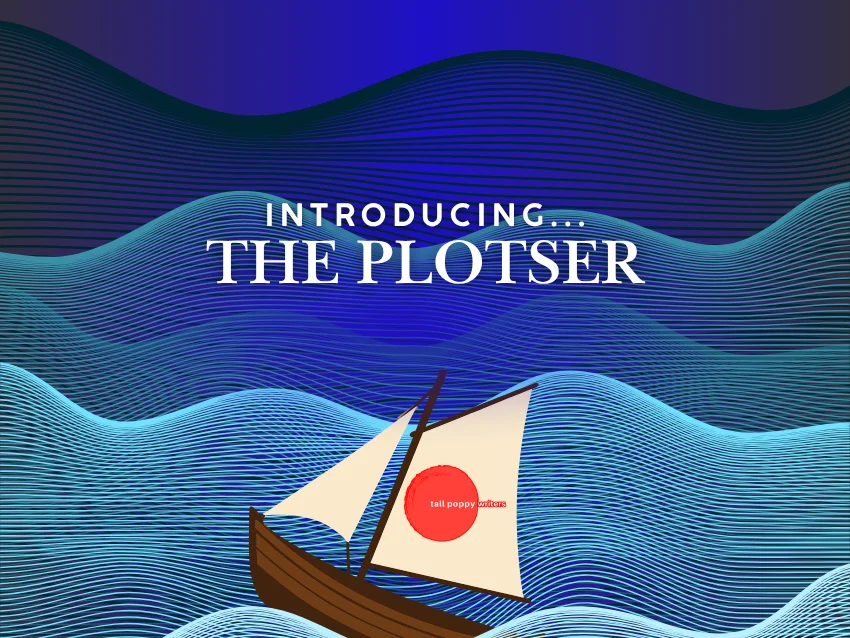
By building the framework of an outline, while encouraging a bit of wiggle room. It’s a system I refer to as “hitting wave tops.” Since I can’t show you my physical presentation of what that means (I talk a lot with my hands, which comes in handy for this example) imagine, if you will, key plot points as the crested tops of waves. These are plot points that I MUST hit in the story. I don’t worry about the space between these waves, however.
Not worry, you say?? How are these plot points going to connect?? Well, they tend to work themselves out. Not helpful, you say. At first glance, you’re right; allowing things to work themselves out isn’t very helpful at all, until I realized that plotting out every single chapter and action was boxing me in. I would start writing a scene, and suddenly the characters would say or do something that veered away from my outline. Now, I had two choices: get them back on track with the outline, or let the story breathe and find its own path (within certain parameters I designed).
Do you know what happened? Letting the story evolve naturally made it better than I ever could have planned from the beginning! Sometimes I don’t know what the solution or conversation should be until I’m in that scene and it’s unfolding. I can see it like a movie in my head, and the characters are moving and doing and talking in natural ways in the moment rather than being forced into a script, but always with that next “wave top” in mind. That part is key!
Crafting Stories Without Boxing Yourself In
So what does my writing process look like as a plotser? As a historical writer, I start with research. Lots and lots of research that I often get lost in and forget that I’m supposed to be writing instead of falling down a rabbit hole of 18th-century wig trends. Then I start thinking about my characters: who they are, what they want, what they fear, backstory, quirks, etc. Next comes the major plot points (a.k.a. my wave tops) that I loosely weave into a timeline of what happens in what order. For any points I’m not sure where to place in the timeline, I hold on to them and wait for the opportune moment, as Captain Jack Sparrow would say.
Sometimes those sidelined points don’t make the cut because the story moves past them, but I tuck them away in hopes they’ll be perfect for another book. Never let good ideas or quotes go to waste! Keep a separate folder for them because you never know when they’ll be of use, and won’t you be delighted to pull out those shiny gems! So if you’ve ever felt like you didn’t fit into the plotter or pantser groups, come sit with me over at the plotser table. It’s the best of both worlds, because there we shape our own rules.